Activities
Nusa Penida manta ray snorkeling: Manta Bay or Manta Point
· 6 min read
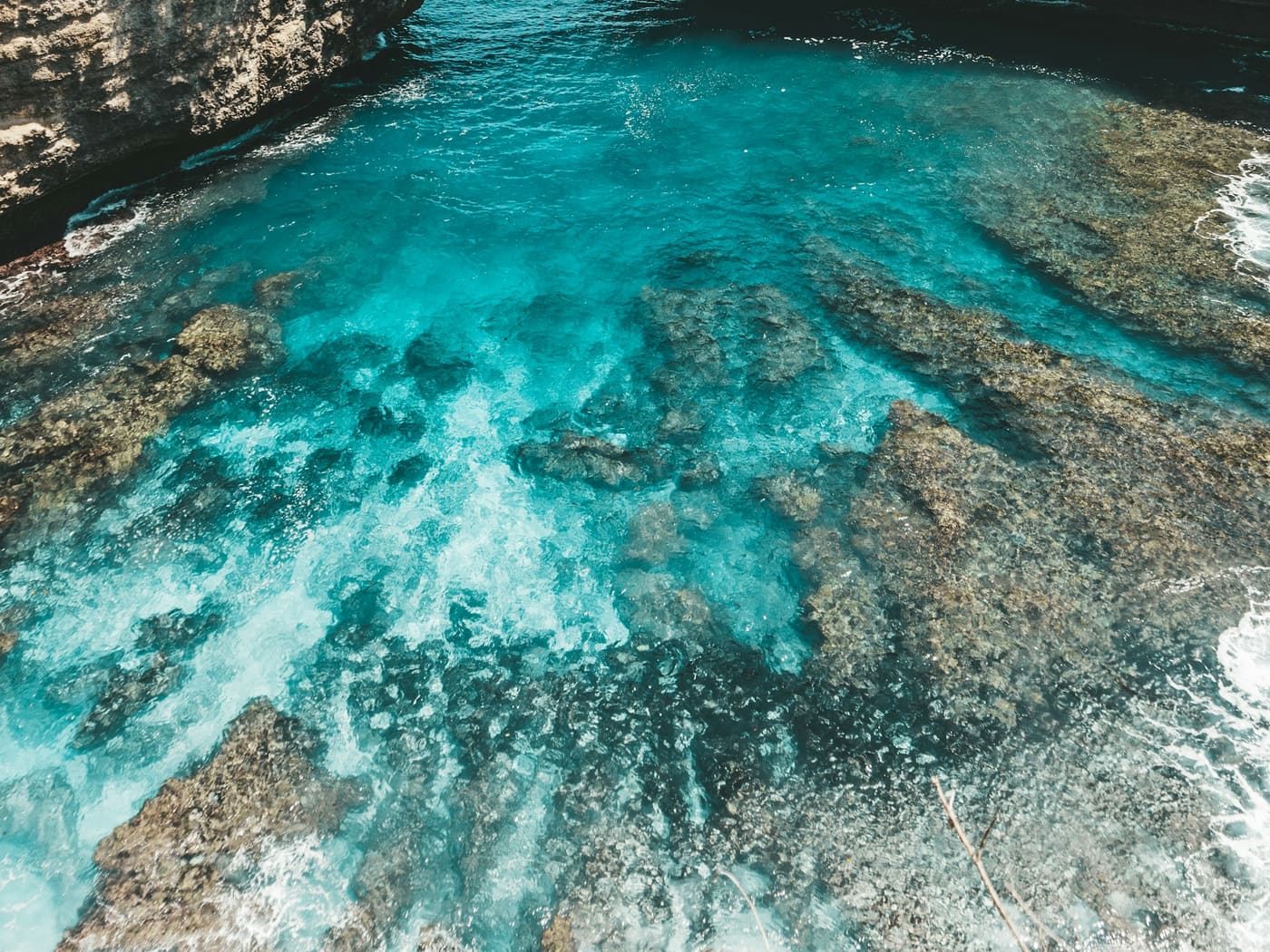
You can snorkel with manta rays at Nusa Penida all year. Reef mantas gather off the south-west coast at two sites: Manta Bay, where most snorkel boats go, and Manta Point, a cleaning station further along the cliffs, more exposed to swell. Shared boat trips from the island are advertised at roughly IDR 250,000 to 500,000 per person.
The waters around Nusa Penida, Nusa Lembongan and Nusa Ceningan form a marine protected area of 20,057 hectares, home to around 300 species of coral and more than 500 species of reef fish. Both species of manta ray are found here: the reef manta, which you are most likely to meet, and the larger oceanic manta. Both are listed as Vulnerable on the IUCN Red List. Mantas feed on plankton and have no sting or barb, so they are no danger to swimmers; the risks on a manta trip come from the sea itself, which is why the details below matter.
What is the difference between Manta Bay and Manta Point?
Manta Bay is a feeding area off the south-west coast, the closer of the two and the site most snorkel tours use. Sightings there are frequent, but so are other boats, and at busy times you share the water with a lot of snorkellers. Manta Point, further along the south coast, is a cleaning station: the rays circle over the reef while small wrasse pick parasites off their skin, often for several minutes at a time. It is the classic dive site, and snorkel boats go there when conditions allow, but it is open to the ocean swell and careful crews skip it on rough days. When you book, ask which site the trip actually visits, because the names are often used loosely.
How much does a manta ray snorkel trip cost?
| Option | Advertised price (2023 to 2026 listings) | What to expect |
|---|---|---|
| Shared boat from Nusa Penida: Manta Bay and 2 or 3 coral spots | About IDR 250,000 to 350,000 per person | Around 3 to 4 hours; mask, fins and a guide in the water |
| Shared boat that includes Manta Point | About IDR 500,000 per person | Longer ride along the cliffs, more exposed sea |
| Full-day tour from Bali with hotel transfers | From about IDR 850,000 to around USD 150 per person | Includes the crossing; some add lunch and insurance |
Some operators add a marine conservation fee, often IDR 100,000 per person in cash, that is not part of the advertised price. Ask before you pay, and check whether pickup from your guesthouse is included.
Should I snorkel from Nusa Penida or join a tour from Bali?
If you are staying on the island, book locally. Boats leave from the north and west coasts (Crystal Bay is a common starting point), many go out around 8 in the morning and are back before noon, and the afternoon is yours. From Bali, a full-day manta tour bundles the hotel pickup, the crossing and the snorkel stops: convenient, but long, with an early start and a lot of time in vehicles. A middle way is to cross on an early boat, sleep one night and snorkel the next morning before an afternoon boat home. A one-way seat costs €16 per crossing and a return ticket €31, with the snorkel trip booked on the island. Bringing your own fins or dive gear? Mention it when you book the crossing: one bag and one small carry-on per person are included, and diving gear is accepted on request.
When is the best time to see manta rays?
Mantas are present all year and operators report encounters on most days, but nobody can promise them. Mornings tend to be calmer, one reason the trips leave early. The dry season, roughly April to October, usually brings the clearest water; from about July to September, though, swell from the south can force boats to swap Manta Point for a sheltered spot. In the wet season, choppy surface conditions cause cancellations of their own. Our guide to the best time to visit Nusa Penida covers the seasons in more detail.
How do I swim with mantas without disturbing them?
The Coral Triangle Center, which works on the marine protected area, has drawn up a code of conduct for manta encounters around Bali together with the Indonesian government and the local marine tourism association. The main points are simple:
- Keep at least 3 metres from a manta, and 10 metres if it seems disturbed.
- Never touch, chase or try to ride a manta, and never block its path. Let it come to you.
- Stay at the surface over a cleaning station rather than diving down on top of the rays.
- Do not stand on or kick the coral. A rash vest protects you from the sun and means less sunscreen in the water.
- Listen to the guide’s briefing, and get out when the group is called back.
Is snorkelling with manta rays safe?
The rays are harmless; the sea is not always. Manta Bay and Manta Point lie off a coast exposed to the open ocean, the boat pitches while you get in and out, and currents around the islands can be strong, especially away from the shore. In September 2026 a visitor drowned at Crystal Bay, one of the usual stops on these trips. Tell the crew honestly how well you swim, wear the life jacket or float they offer if you are not confident, stay close to the guide, and take a seasickness tablet before you leave if you need one. A good operator gives a briefing, carries life jackets, puts a guide in the water and cancels when conditions are poor: take a cancellation as a sign you chose well.
What else does a snorkel trip stop at?
Most trips combine the mantas with two or three coral sites. Crystal Bay, on the west coast, has clear water and coral close to the beach, though the current picks up beyond the bay. Gamat Bay is usually calmer, with colourful coral and plenty of fish. Some boats add a drift along the north coast near Toyapakeh, where turtles are sometimes seen. If you would rather stay dry, the same coastline looks just as good from the cliffs: our Nusa Penida itinerary fits a snorkel morning around the west and east coast days, and the trip is just as easy from Nusa Lembongan (see Nusa Penida vs Nusa Lembongan).
Frequently asked questions
- Is there a manta ray season in Nusa Penida?
- No fixed season: reef mantas are around the island all year and are seen on most days. The dry season, April to October, usually has the clearest water, but swell can keep boats away from Manta Point from about July to September.
- Manta Bay or Manta Point: which is better for snorkelling?
- Manta Bay is closer, more sheltered and used by most snorkel tours, but it can be crowded. Manta Point is a cleaning station where rays often linger, but it is more exposed and only visited when the sea allows. Ask your operator which one the trip goes to.
- Do I need to be a strong swimmer?
- You need to be comfortable in open water with waves and some current. If you are not confident, wear a life jacket or float, tell the crew and stay close to the guide.
- Can manta rays sting you?
- No. Mantas have no sting or barb and feed on plankton. Keep at least 3 metres away and never touch them, for their sake rather than yours.
- How much is a manta snorkel trip from Nusa Penida?
- Shared boat trips from the island are advertised at roughly IDR 250,000 to 500,000 per person, depending on whether they visit Manta Bay or Manta Point. Some operators add a conservation fee of around IDR 100,000 in cash.