Things to see
Best beaches in Nusa Penida: viewpoints and safety tips
· 6 min read
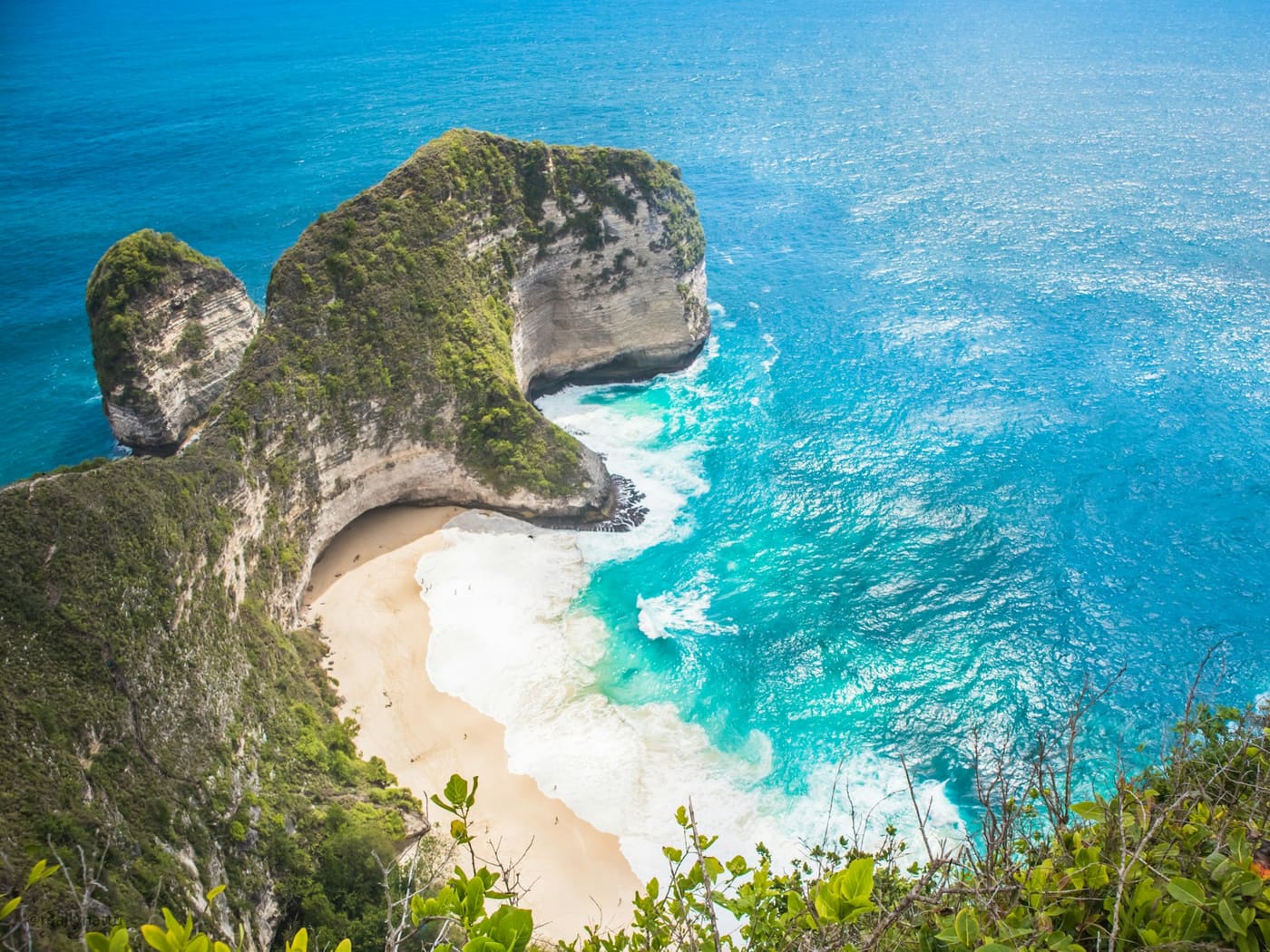
Nusa Penida’s coastline is a run of limestone cliffs dropping straight into deep blue water, broken by small coves of white sand. The views are extraordinary, and so is the power of the ocean below them: the island faces open water, and the swell that makes the scenery so dramatic is the same swell that makes some of these beaches dangerous. Here are the places most worth your time, split by coast, with an honest word on what is safe to do at each.
| Spot | Coast | Effort | Swimming |
|---|---|---|---|
| Kelingking | West | Easy at the top, very hard to the beach | Banned |
| Broken Beach | West | Easy walk around the rim | No |
| Angel’s Billabong | West | Short scramble over rock | Only when the sea is flat |
| Crystal Bay | West | Easy, beach by the road | Yes, in calm conditions |
| Diamond Beach | East | Long stairs cut into the cliff | Often rough — stay in the shallows or out |
| Atuh | East | Steep path down | Sometimes, check conditions |
| Thousand Islands viewpoint | East | Short walk | Viewpoint only |
The west coast
Kelingking is the reason many people come to Nusa Penida at all: a long headland shaped like a T-Rex, curving down to a perfect crescent of white sand. The view from the top is the experience, and you can enjoy it in a few minutes from the paved viewpoint. The path down to the beach is another matter. It is very steep, partly a staircase of rock and roots with bamboo handrails, slippery after rain and brutally hot at midday, and the climb back up is harder than the descent. Only attempt it with good shoes, plenty of water and real fitness, and turn back if it feels wrong. Swimming at the bottom is banned: the waves are powerful. Our Kelingking Beach hike guide covers the descent step by step. Crystal Bay is the opposite: a sheltered sandy bay you reach by road, with a small island offshore, warungs under the trees and good snorkelling when the sea is calm. It is the best place on the west coast to actually get in the water, and a lovely spot to end the day, though currents further out can be strong.
Broken Beach and Angel’s Billabong are a few minutes’ walk apart, so you visit them together. Broken Beach is a circular cove enclosed by cliffs, where the sea rushes in through a huge natural arch; you walk the path around the rim and look down, rather than going in. Angel’s Billabong is a natural rock pool on the edge of the ocean, its water so clear it looks like glass on a calm day. It is also the most dangerous spot on the island. When the tide is high or the swell is up, waves break over the rocks without warning and sweep across the pool, and visitors have been pulled off the ledge into the open sea.
At Angel’s Billabong, look before you go down: if any waves are splashing over the outer rocks, stay up on the path. Never stand on the seaward edge for a photo, and do not swim there unless the sea is completely flat — local guards may close the pool on rough days.
The east coast
The east coast is quieter and catches the morning sun, which makes it a beautiful place to start a day if you are staying on the island. Diamond Beach is a pale strip of sand at the foot of a cliff, reached by a stairway carved into the rock; it is the descent, with the beach opening up below you, that most people remember. The waves here are often strong, so most visitors paddle at the edge rather than swim. Next door, Atuh is a curved cove facing a group of rock islets, one of them pierced by an arch, with turquoise water and a few warungs on the sand; the path down is steep but well used. Above them, the Thousand Islands viewpoint looks out over a scatter of rocky islets along the coast. It takes only a short walk from the road and is well worth the stop, especially early, before the heat and the light get harsh. The stairs, fees and timing are in our Diamond Beach guide.
- Kelingking and Diamond Beach stairs: proper shoes, water, and no attempt in the midday heat or after heavy rain.
- Do not swim at beaches where waves are breaking hard on the sand. Nusa Penida faces open ocean and rips can be strong even when it looks inviting.
- Stay behind barriers and away from cliff edges. No photo is worth stepping past a fence or onto crumbling rock.
- Carry a card and some small cash: since September 2026 the main sights, including Kelingking, Broken Beach, Angel’s Billabong and Crystal Bay, charge a ticket of around IDR 25,000 per adult, plus a small parking fee.
Frequently asked questions
- Can you swim at Kelingking Beach?
- No, swimming is banned there. The beach faces open ocean, with powerful waves and strong currents. Enjoy the sand, stay back from the waterline, and save your swim for Crystal Bay on a calm day.
- Is Angel’s Billabong safe?
- Only in calm conditions. At high tide or with a big swell, waves crash over the rocks into the pool and can sweep people out to sea. If waves are breaking over the outer edge, admire it from the path.
- Which beach is best for swimming and snorkelling?
- Crystal Bay, when the sea is calm. Atuh can also be pleasant on quiet days. Always check conditions and ask locally before getting in.
- How long does the walk down to Kelingking Beach take?
- Allow well over an hour for the round trip, more if it is busy or hot — the climb back up is the hard part. Many people happily skip it and enjoy the view from the top.
- Can I see all these places on a day trip?
- Not comfortably. On a day trip, choose the west coast or the east coast. To see both, stay a night — book two one-way seats from Sanur on this site and pick your return day freely.